
Why “Good Design” Is Subjective but Good UX Is Not
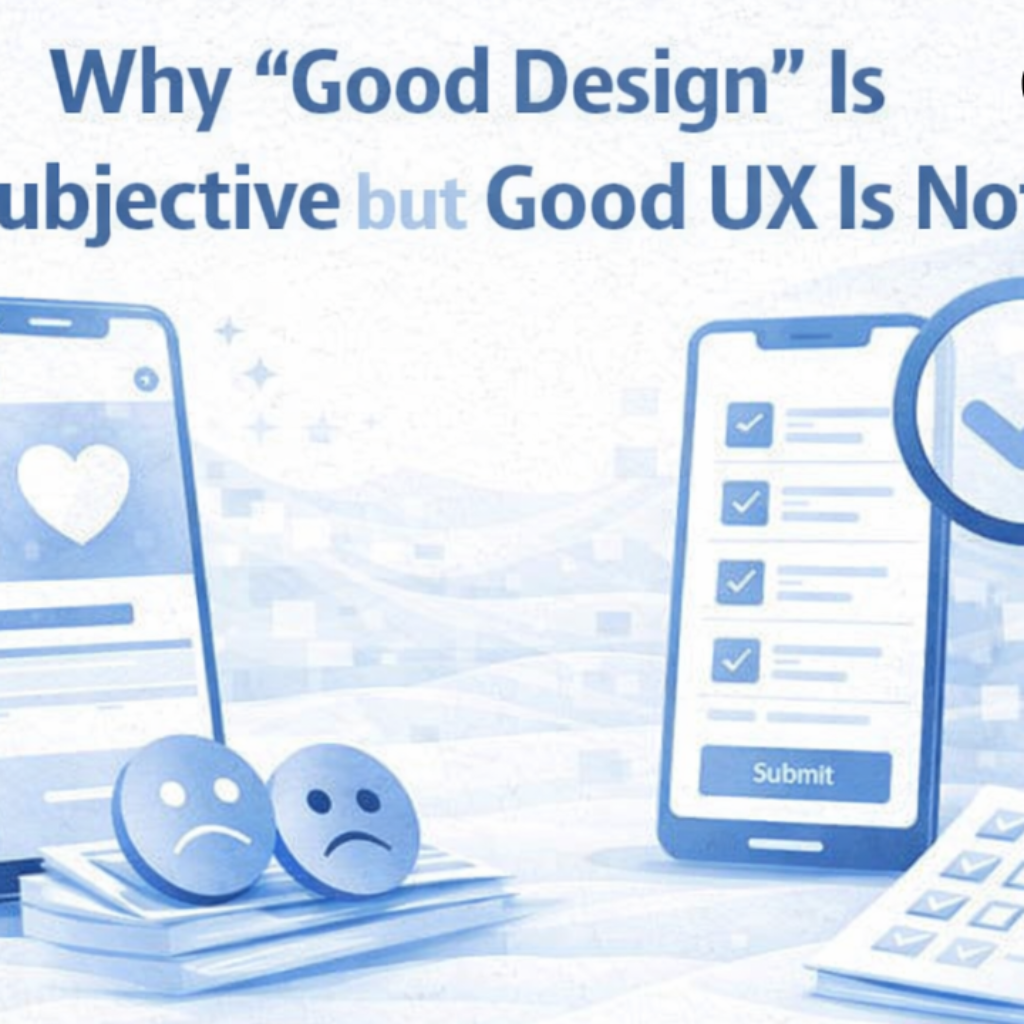
Introduction: The Problem With Design Opinions Almost every product team has experienced this situation. Someone looks at a screen and says, “I don’t like this design,” while someone else thinks it looks perfectly fine. Soon, the discussion turns into opinions about colors, fonts, and layouts. This happens because design is personal. What feels modern or attractive to one person may not feel the same to another. And that’s completely normal. But there is something many teams misunderstand. While good design can be debated, good user experience (UX) is not based on opinion. UX is based on how real users interact with a product, and that makes it far more objective. Why Design Will Always Feel Subjective Visual design is closely tied to personal taste. People come from different backgrounds, follow different trends, and respond emotionally to colors and styles in different ways. Because of this, design feedback often sounds vague or emotional. You may hear comments like “This feels outdated” or “It doesn’t look premium enough.” These reactions are not wrong, but they don’t explain whether users can actually use the product easily.Design opinions usually answer the question, “Do I like this?”They do not answer, “Does this work well for users?” What UX Actually Focuses On User experience is not about how a screen looks. It’s about how it feels to use. Good UX means users can open an app or website and immediately understand what to do. They don’t feel confused, lost, or frustrated. They can complete their task without needing instructions or help. UX looks at behavior, not preference. It focuses on clarity, ease, and flow. When UX is done well, users move forward naturally without stopping to think too much. The Key Difference: UX Can Be Measured This is where UX clearly separates itself from design. You cannot measure whether a design is “nice.” But you can measure user experience. You can see where users leave, where they get stuck, how long tasks take, and whether people complete important actions. If users abandon a form, struggle to navigate, or exit an app quickly, the UX is weak, even if the interface looks modern and clean. Numbers and behavior reveal problems that opinions often miss. This is why many visually attractive products still fail. When Design Looks Good but UX Feels Wrong It’s very common to see apps that look beautiful but feel difficult to use. Navigation may be unclear, important actions may be hidden, or too much information may appear at once. In these cases, design has been given more importance than usability. The product tries to impress instead of helping. Good UX always chooses clarity over decoration. If users feel confused, no amount of visual polish can fix that experience. Good UX Is About Making Things Easier The goal of UX is simple: reduce effort for users. When UX is strong, users don’t need to think about what comes next. They don’t hesitate. They don’t feel unsure. Everything feels natural and predictable. If a user has to pause and ask, “What should I do now?” That moment of confusion is a UX problem, not a design one. Why UX Should Not Be Decided by Opinion Many products struggle because UX decisions are made based on internal preferences instead of real user behavior. Teams argue about what looks better instead of observing what works better. Strong UX decisions come from understanding users, testing ideas, and improving based on real feedback. This removes guesswork and replaces it with confidence. That’s why UX is not about taste; it’s about evidence. A Simple Shift That Changes Everything Instead of asking whether something looks good, teams should ask whether it helps users reach their goal easily. This small shift in thinking leads to better products. When ease of use becomes the priority, design choices naturally become clearer and more meaningful. Conclusion Design may attract users at first glance.But UX is what makes them stay, return, and trust the product. Styles and trends will always change. User expectations for clarity and ease will not. Products that succeed long-term are built on strong user experience, not just good-looking screens. At LogicGo Infotech, we focus on building UI/UX experiences that are guided by real user behavior, not personal opinions. Our approach helps businesses create digital products that feel intuitive, simple, and easy to use. The result is experiences users naturally trust and enjoy.